
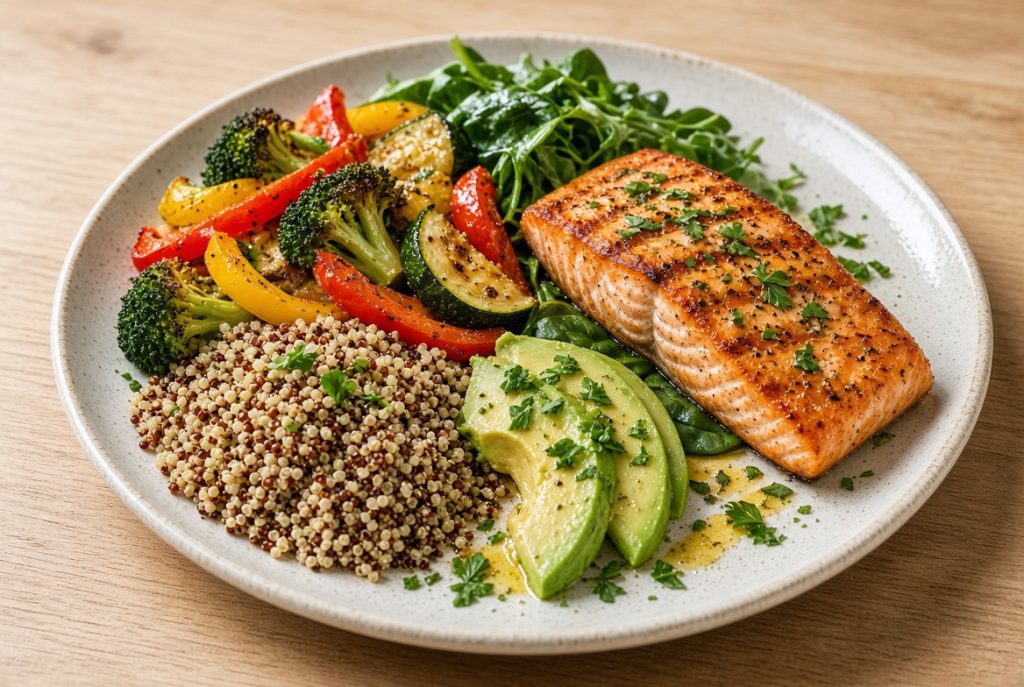
A well-composed meal can carry you through the afternoon without the mid-day crash that follows a heavy sandwich or a bowl of pasta alone. The balanced plate method offers a practical visual guide for assembling nutrient-dense meals that support sustained energy, better focus, and genuine satisfaction. Rather than counting calories or measuring every ingredient, you simply divide your plate into sections that prioritize vegetables, protein, and quality carbohydrates. This approach works for breakfast, lunch, or dinner and adapts easily to different preferences, schedules, and cultural food traditions.
Understanding the Balanced Plate Approach
Nutrition guidance from organizations such as the Harvard T.H. Chan School of Public Health centers on filling roughly half your plate with vegetables and fruits, one-quarter with protein-rich foods, and one-quarter with whole grains or other smart carbohydrate sources. A modest amount of healthy fat rounds out the meal. This proportion supplies fiber that slows digestion, protein that promotes fullness, and complex carbohydrates that release energy gradually. The result is steadier blood sugar levels and fewer energy dips compared with meals dominated by refined starches or low-fiber options.
The method also encourages variety. Different colors and textures bring a wider range of vitamins, minerals, and beneficial plant compounds. Over time, consistently building plates this way supports overall nourishment without the need for restrictive rules or special products.
Why Proportions Matter More Than Perfect Tracking
Many people find detailed tracking tedious and difficult to maintain. Visual proportions remove that barrier. You can glance at your plate and adjust in the moment—adding more vegetables if the protein section looks large, or swapping white rice for quinoa when available. This flexibility makes the habit sustainable for busy weeks, travel, or shared meals.
Core Elements of a Balanced Plate
Each section of the plate serves a distinct purpose while working together.
Vegetables and Fruits as the Foundation
Aim for non-starchy vegetables to occupy the largest share of the plate. Options such as leafy greens, broccoli, bell peppers, zucchini, carrots, cucumbers, and tomatoes add volume, fiber, and micronutrients with relatively few calories. A small portion of fruit can fit here as well, especially at breakfast or when a meal needs a touch of natural sweetness. Potatoes and other starchy vegetables are better counted with the carbohydrate section rather than the vegetable half, because they affect blood sugar more like grains.
Quality Protein for Satiety and Repair
The protein quarter helps maintain muscle, supports hormone function, and keeps hunger at bay between meals. Good choices include fish, poultry, eggs, beans, lentils, tofu, tempeh, Greek yogurt, or modest portions of leaner red meats. Plant-based proteins such as lentils and chickpeas bring the added benefit of fiber. Combining different sources across the week ensures a broader amino-acid profile without requiring any single food at every meal.
Smart Carbohydrates for Fuel
The remaining quarter supplies energy that lasts. Whole grains such as brown rice, quinoa, oats, barley, or whole-grain bread, along with starchy vegetables like sweet potatoes, deliver fiber and nutrients that refined versions lack. These foods help prevent the rapid rise and fall in energy that can follow meals built mainly on white bread or sugary sauces.
Healthy Fats in Moderation
A small amount of unsaturated fat—such as a drizzle of olive oil, a few slices of avocado, a handful of nuts, or seeds—improves absorption of fat-soluble vitamins and adds flavor and staying power. Fats do not need their own large section; they simply enhance the other components.
Practical Steps for Everyday Meals
Start by choosing your vegetables first so they claim the largest space. Next, add a palm-sized portion of protein. Then place a similar-sized portion of whole grains or starchy vegetables. Finish with a modest serving of healthy fat and season with herbs, spices, lemon, or a simple vinaigrette. Drink water, unsweetened tea, or coffee with the meal rather than sugary beverages.
Breakfast example: scrambled eggs with spinach and tomatoes, a small portion of oats, and sliced avocado.
Lunch example: a large salad of mixed greens, roasted vegetables, grilled chicken or chickpeas, quinoa, and olive-oil dressing.
Dinner example: baked salmon, steamed broccoli and carrots, brown rice, and a sprinkle of sesame seeds.
These combinations travel well in containers for meal prep. Cook a batch of grains and roasted vegetables at the beginning of the week, then mix and match proteins as needed.
Common Mistakes When Building Meals
One frequent error is letting refined carbohydrates dominate the plate while vegetables become a small side. Another is skipping protein entirely, which often leads to earlier hunger. Some people also overdo healthy fats by adding large amounts of oil, cheese, or nuts on top of an otherwise balanced meal. Finally, relying on the same few vegetables or proteins day after day reduces nutrient variety. Rotating colors and sources prevents this while keeping meals interesting.
Conclusion
The balanced plate method turns everyday eating into a reliable source of steady energy and genuine nourishment. By consistently filling half the plate with vegetables, one-quarter with protein, and one-quarter with quality carbohydrates—and finishing with a modest amount of healthy fat—you create meals that support focus, recovery, and satisfaction without complicated rules. Over time, the visual habit becomes second nature, making it easier to nourish yourself well whether you are cooking at home, packing lunch, or choosing from a menu. Small, repeatable adjustments on the plate add up to a stronger, more balanced lifestyle.
FAQ
Does the balanced plate method work for vegetarian or vegan diets?
Yes. Beans, lentils, tofu, tempeh, and other plant proteins fit the protein section easily. Pair them with plenty of vegetables and whole grains, and include sources of healthy fat such as nuts, seeds, or avocado.
Can I use this approach when eating out?
Most restaurants allow adjustments. Request extra vegetables, ask for grains or proteins to be prepared simply, and skip or share large portions of refined starches or creamy sauces. Visualizing the plate sections helps guide choices even when options are limited.
How does this differ from strict calorie counting?
The balanced plate focuses on food quality and proportions rather than numbers. It naturally supports appropriate portions for most people while emphasizing nutrient-dense choices. Some individuals may still benefit from occasional tracking for specific goals, but the visual method is easier to maintain long-term.
What if I am very active or have higher energy needs?
Increase the carbohydrate and protein portions slightly while keeping vegetables abundant. Athletes and highly active people often do well with a bit more total food, but the same proportional framework still applies.
Are starchy vegetables counted as the vegetable half?
Non-starchy vegetables belong in the larger half. Starchy options such as potatoes, corn, or winter squash fit better with the carbohydrate quarter so the plate still delivers enough fiber and volume from lower-calorie produce.