
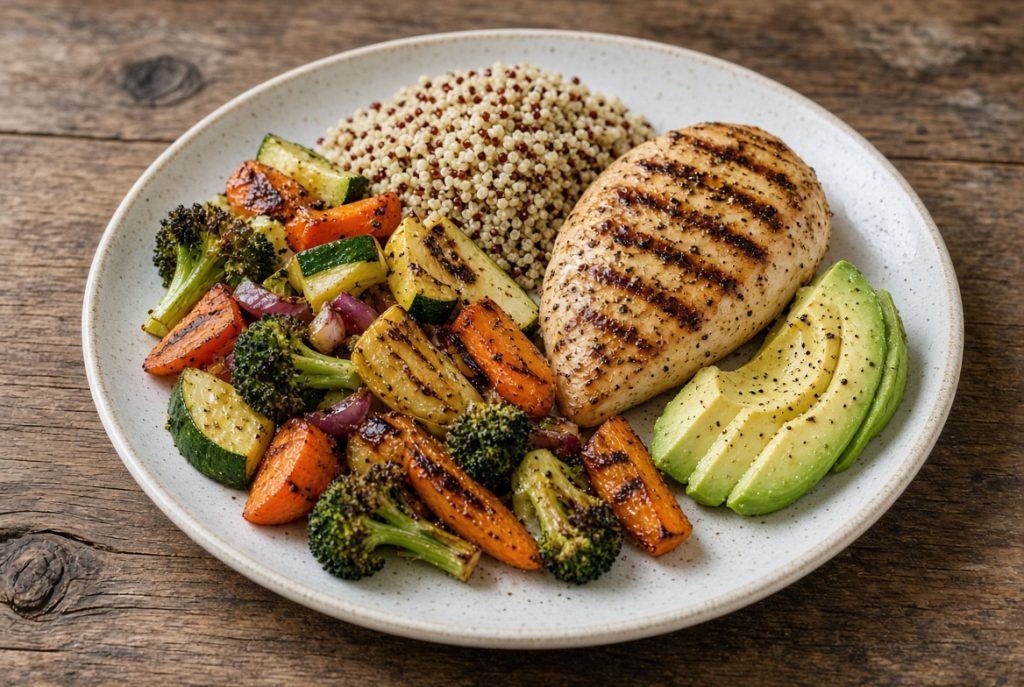
Most people know they should eat more vegetables and less ultra-processed food. The harder part is turning that knowledge into meals that feel satisfying and keep energy steady through a normal day. The balanced plate method offers a visual, flexible way to do exactly that. Instead of tracking every gram or following rigid meal plans, you simply arrange food on your plate in proportions that naturally deliver fiber, protein, and quality carbohydrates together.
This approach works because it prioritizes volume from vegetables while still including enough protein and slower-digesting carbohydrates to support muscle, focus, and lasting fullness. It adapts to almost any cuisine, schedule, or dietary preference, making it practical for international readers who cook at home.
What the Balanced Plate Method Actually Looks Like
Picture a standard dinner plate. Roughly half of the surface holds non-starchy vegetables or fruit. One quarter contains a protein source. The remaining quarter holds a carbohydrate-rich food, preferably one that still has some fiber. A small amount of healthy fat—such as olive oil, nuts, seeds, or avocado—can be added across the plate or used in cooking.
This is not a strict calorie equation. It is a visual guide that makes nutrient density the default. When vegetables take up the most space, you automatically increase fiber and micronutrients while keeping portions of denser foods reasonable. Protein in every meal helps preserve muscle and reduces the urge to snack an hour later. Carbohydrates supply usable energy without the sharp spikes that often follow refined-grain-heavy meals.
Why This Structure Supports Energy and Satisfaction
Combining fiber, protein, and moderate carbohydrates slows the rate at which glucose enters the bloodstream. Many people notice fewer afternoon energy dips and less intense hunger between meals once they adopt this pattern consistently. The volume from vegetables also increases meal satisfaction, so you are less likely to finish the plate and immediately look for something else.
Over weeks, the method quietly improves overall diet quality. People tend to eat a wider range of produce simply because the plate looks incomplete without color. At the same time, it remains flexible enough for social meals, travel, or days when cooking time is limited.
Building a Plate Step by Step
Start with the vegetables. Choose at least two colors when possible—leafy greens plus something roasted or raw. Next, add the protein. Options include eggs, fish, poultry, beans, lentils, tofu, tempeh, or plain Greek yogurt. Then place the carbohydrate portion: brown rice, quinoa, oats, sweet potato, whole-grain bread, or fruit. Finally, include a source of fat for flavor and absorption of certain nutrients.
Season freely with herbs, spices, citrus, vinegar, or modest amounts of sauce. The goal is a meal you enjoy eating regularly, not a temporary restriction.
Sample Plates for Different Meals
Breakfast
Half the plate: sautéed spinach and tomatoes or a large bowl of mixed berries.
Quarter: scrambled eggs or Greek yogurt.
Quarter: oats or whole-grain toast.
Fat: a few almonds or a drizzle of olive oil on the eggs.
Lunch
Half: a large mixed salad or roasted broccoli and peppers.
Quarter: grilled chicken, chickpeas, or salmon.
Quarter: quinoa or leftover brown rice.
Fat: avocado slices or olive oil-based dressing.
Dinner
Half: roasted cauliflower, zucchini, and carrots.
Quarter: baked white fish or lentil stew.
Quarter: roasted sweet potato.
Fat: tahini drizzle or a small handful of pumpkin seeds.
These examples work across many cultures. A Mediterranean version might use grilled fish, salad, and a modest serving of whole-grain bread. An Asian-inspired plate could feature tofu, plenty of stir-fried vegetables, and a smaller portion of brown rice.
Common Mistakes That Reduce the Benefits
One frequent issue is letting the carbohydrate section expand until it dominates the plate. Another is treating vegetables as an optional side rather than the foundation. Some people also skip fat entirely, which can leave meals less satisfying and reduce absorption of fat-soluble vitamins. Finally, relying on the same three vegetables every day limits micronutrient variety even if the proportions look correct.
The method works best when the plate stays colorful and the protein portion is large enough to notice. Small adjustments—adding one extra vegetable or swapping a refined grain for a whole one—compound over time.
Making the Method Part of Your Routine
You do not need special equipment or a complete kitchen overhaul. Most people can apply the proportions with the food already in their refrigerator. Pre-cutting vegetables or batch-cooking a protein once or twice a week makes assembly faster on busy evenings. When eating out, the same visual guide still helps: request extra vegetables, share a starch-heavy dish, and ensure protein is present.
Over time, the balanced plate becomes less of a rule and more of a default way of looking at a meal. Energy stays more even, cooking feels simpler, and the habit of including substantial vegetables becomes automatic rather than forced.
Conclusion
The balanced plate method succeeds because it removes complexity while still delivering the core elements of a nourishing meal. By letting vegetables occupy half the plate and pairing them with protein and quality carbohydrates, you create meals that support steady energy and genuine satisfaction. The approach adapts to different tastes, cultures, and schedules, which is why it remains useful long after novelty diets fade. Start with your next meal, arrange the sections deliberately, and notice how the rest of the day feels.
FAQ
Does the balanced plate method require exact measuring?
No. Visual estimates are sufficient. The purpose is consistent proportions rather than precise weights.
Can I use this approach if I follow a vegetarian or vegan pattern?
Yes. Beans, lentils, tofu, tempeh, and Greek yogurt (or fortified plant alternatives) all work as the protein quarter. Just ensure the protein source is substantial enough to fill that section.
What if I am very active and need more carbohydrates?
You can slightly enlarge the carbohydrate portion or add a small extra serving after the main plate, while still keeping vegetables as the largest section.
How quickly do people notice a difference in energy?
Many notice more stable energy within a few days once meals consistently include protein, fiber, and moderate carbohydrates together. Individual responses vary.
Is this suitable for weight management?
The method supports portion awareness and higher fiber intake, which many people find helpful for managing hunger. It is not a guaranteed weight-loss program; results depend on overall calorie intake and lifestyle factors.